How to Translate Manhwa and Webtoons to English Online
Ever fallen in love with a new manhwa, binge-read 50 chapters in a night, only to hit a wall? It's the dreaded "End of Official Translation" notice. While fan translation teams bridge that gap, the process is a highly coordinated collaborative effort.
Webtoon translation isn't magic; it’s a five-stage workflow involving translators, digital artists, and editors.
Meet the Scanlation Team: The 5 Key Roles
Behind almost every fan-translated manhwa is a "scanlation" team—a group of fans operating like a digital assembly line:
- Translator: Converts the original Korean dialogue into an English script.
- Proofreader: Polishes the script for grammar and natural flow.
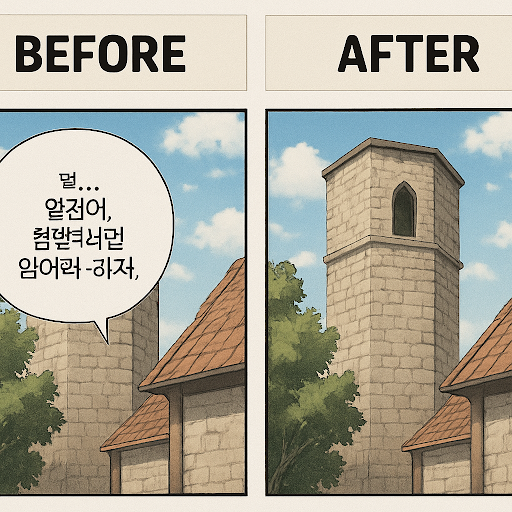
- Cleaner/Redrawer (C/R): Digitally erases Korean text and repaints the art hidden underneath.
- Typesetter (TS): Places the English text into the clean speech bubbles.
- Quality Checker (QC): Performs a final review to catch errors before release.
The Step-by-Step Workflow
Step 1: Acquiring the "Raws"
Every project begins with "raws"—the original, untranslated Korean pages from platforms like Naver or KakaoPage. High-quality files are essential; blurry images result in an unprofessional final product.
Step 2: Localization (More Than Machine Translation)
This stage is about localization—adapting jokes and idioms so they make sense to an English audience.
- Tools: Translators often use Papago (developed by Naver) as it handles Korean colloquialisms better than other AI.
- The SFX Challenge: Translating onomatopoeia (sound effects) requires finding words that match the feel of the art, such as choosing "Swoosh" vs. "Fwoom."
Step 3: The Unseen Art (Cleaning & Redrawing)
This is often the most labor-intensive stage.
- Cleaning: Removing the Korean text from bubbles.
- Redrawing: If a sound effect covers a character’s armor, the Redrawer must digitally repaint the missing details to match the original artist's style once the text is erased.
Step 4: Typesetting
The typesetter acts as a graphic designer. They don't just paste text; they choose fonts that match the mood.
Pro Tip: A demon lord’s threat should use a jagged, aggressive font, while a whisper requires something light and clean. Generic fonts like Arial often break reader immersion.
The Digital Toolkit
| Task | Software Recommendations |
|---|---|
| Art & Layout | Adobe Photoshop, Clip Studio Paint, or Photopea (Free) |
| Text Extraction | OCR (Optical Character Recognition) software |
| Translation | Google Docs, Papago, DeepL |
Is Translating Manhwa Legal?
The short answer is no. Distributing work you don't own is copyright infringement. However, the community follows an unwritten Ethical Code:
- Stop when licensed: When an official English version is announced, reputable teams cease their work.
- Non-profit: Fan translations are intended to build hype, not to replace the official industry.
How to Get Started
If you're inspired to contribute, you don't need to be an artist or a linguist to start.
- Begin as a Proofreader or QC: These roles only require a strong command of English and an eye for detail.
- Where to look: Search for "scanlation recruitment" on Reddit or join the Discord servers of your favorite series.